“that unrelenting emphasis on connecting”
By Garth Sabo (CISAH)
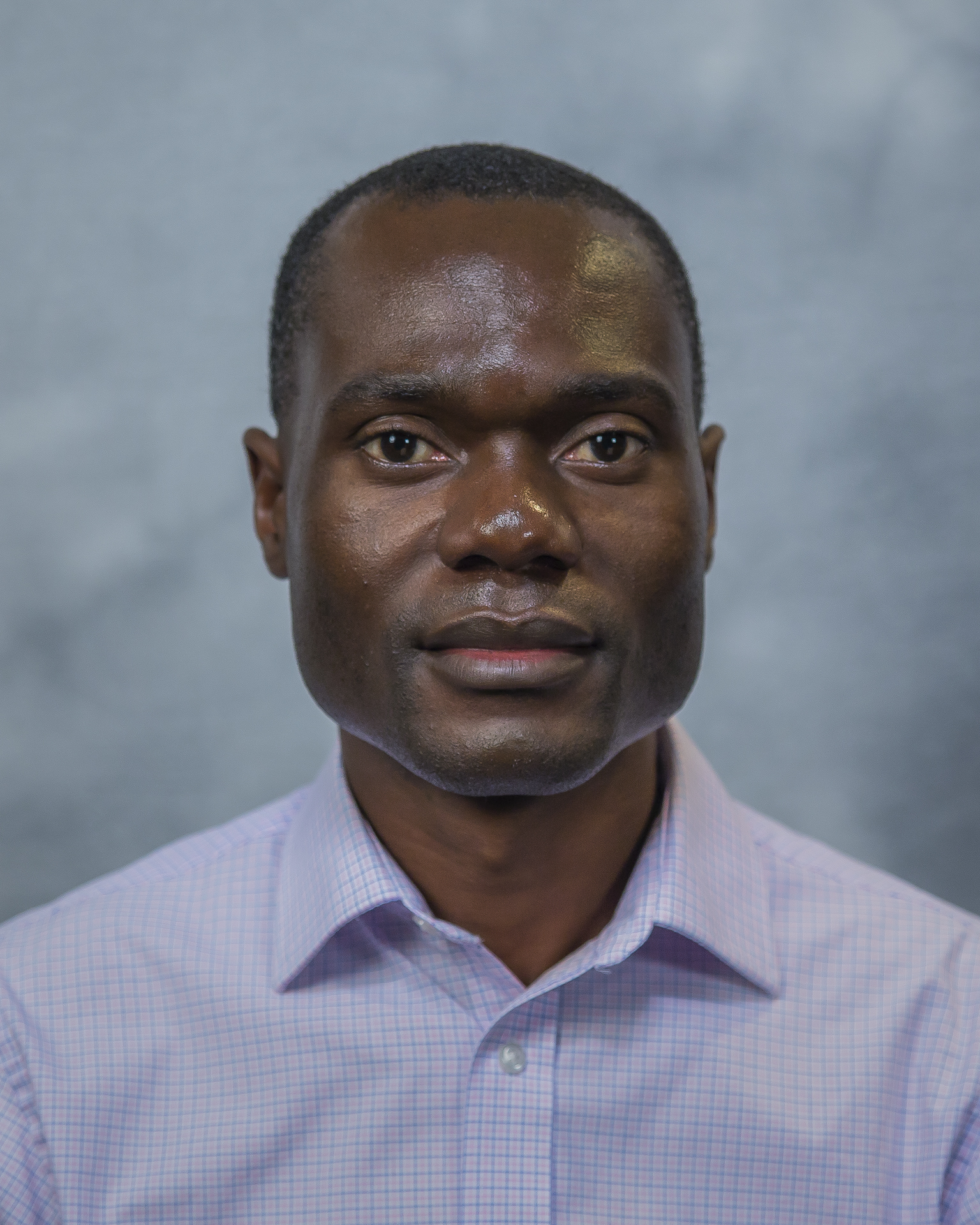
In addition to serving as the inaugural Director of the Institute of Ubuntu Thought and Practice (IUTP) on campus, Dr. Upenyu Majee teaches IAH 205 (Africa and the World). Earlier this year, I stopped by his class to chat with his students after one of them left a voicemail with the Dean’s office praising how much he was learning in class with Dr. Majee and Grace Tukurah, his 2025-2026 teaching assistant.
This October, Upenyu and I met to chat more about his approach to IAH teaching. Here are some highlights of our conversation (edited for clarity and concision).
Garth Sabo: For someone who hasn’t had the chance to see you in the IAH classroom, do you mind providing a brief summary of what your class is and what your approach to it looks like?
Upenyu Majee: Yeah, for sure. The course that I offer is IAH 205: Africa and the World. And the subtitle is Portraits of Historical and Contemporary Africa. I also should mention that my teaching of this course comes as a package with my responsibility as the Director of the Institute of Ubuntu Thought and Practice. As part of my work with the IUTP, I care deeply about how we take what we know about Ubuntu and actualize it in practice. It could be pedagogical. It could be methodological. It could also be administrative in terms of how you go about running organizations and institutions. We are thinking about how to apply what we know about Ubuntu to how we live with each other and how we go about our work.
GS: I think you and I are of similar minds on the importance of a teaching application for the administrative priorities that keep the university running. When you think about putting Ubuntu principles into practice and you think about an IAH student audience, are there ways that you bring Ubuntu into practice for a gen ed audience that would be different than if you were running this as a discipline or department-specific course?
UM: For me, a claim that I’m trying to make is that irrespective of content, whether it’s a biology class, an arts class, or a business class, one can put the content of the course into conversation with Ubuntu principles. And the ways in which we do that, at least in this IAH course that I teach, is by foregrounding lived experience.
I don’t treat lived experiences as data but as knowledge that holds value on par with academic knowledge. If we connect at the level of the lived experiences, it changes the posture we bring to our engagements with each other, because then it creates more curiosity. We cannot argue with someone’s lived experiences. We can argue with their opinions, and those opinions are not separate from their lived experience. But if we were able to connect at the level of the lived experience, it changes how we engage with each other’s opinions. That’s the mindset I bring.
And if I do my job well in the classroom, I take the students’ and my own lived experiences and put them into conversation with the content of the course on portraits of historical and contemporary Africa. And what happens there is the learning that I’m trying to shoot for.
GS: You mentioned lived experience. One of the things that I know is a hallmark of your class for IAH is the strong integration you have with guest speakers. I don’t even know if we can call it a persistent element. It’s a universal — do you ever have a class where you don’t have a guest speaker scheduled to join you?
UM: I don’t think so. If ever.
GS: I didn’t think so! I’d be curious to hear more about how that fits into your approach to the class.
UM: What I’m trying to do with the guest speakers is for the students enrolled in the course to connect in a very real and meaningful way with people who live or work on the continent. Some people zoom in from the continent, others could be visiting at MSU for a few months or are here as students. Others could be American, but they do research or other on the continent.
The reason I do that is that stories do matter. Ultimately, it’s not just about the actual content of the course, but the human connections that the guest speaker arrangement affords. For me the connections really matter, because I want to foster the kind of proximity that is consistent with the relational tenets of Ubuntu.
GS: The way these various things come together in your class has led to students in your IAH classes saying that your class is highly effective at increasing student interest in the arts and humanities. And I’m curious if you have any thoughts about what the “why” behind that might be.
UM: I should start by pointing out that in my view, communication is very flawed, in part because language does not have the capacity to capture our thought processes 100%. Even now as we’re chatting, what you are hearing is a figment of what I’m trying to put across. I think we need to do a better job in recognizing that.
So, when I’m talking to you, I should do better in really listening. And to support my listening, I should ask you questions. The more I probe and probe and probe, the better I can get at understanding you better. For example, even in this conversation, I need to pay more attention to the questions you are posing and come to them with a posture of wonder: What are you really asking? And what happened that you’re asking this or that question?
But most of us treat other people’s questions as if they are targets that we need to shoot at. We tend to want to wrestle them to the ground. We feel like we are more whole when we can come up with immediate answers. But too often, those answers are missing the target, because we are probably shooting in the dark. We don’t even understand what’s being asked.
So because of that, I tell my students that in this class, we sit with the questions. We let these questions accompany us. I encourage them to not be scared to sit with the questions. Instead, I invite them to be comfortable with uncertainties, with contradictions.
That’s why the major assignment that they do every week when they read the material assigned, they pose questions. They might synthesize what they have read, but the synthesis should be framed as a question. And after they pose their own question, each person then engages with a fellow classmate’s question. I’m not asking them to respond with an answer, but to pose another question. And we could go on and on like this, and I am convinced that we stand a better chance of getting to the answers better by this way.
So for me, dwelling with questions generates curiosity. I think that is one of the things that has been transformative in the class.
GS: When you’re describing training students to live with contradictions and avoid wrestling the question to the ground, to breathe with it, can you unpack how you guide folks through the steps of becoming more familiar with this? We know that this is learning they need to achieve. But it’s also learning that’s very different from what they’ve often been prepared to do prior to coming to MSU or coming to your class. Can you dive into the specifics of what do you do to fill that gap?
UM: My sense is that most of the students I see in my class are coming from disciplinary fields where, when a question is posed, there has to be a correct answer. So, what I try to do with them, in addition to having guest speakers every week, is to draw their attention to contradictions and complexities as the reality of our existence. I start every class session with a check-in activity. I set this up as a dedicated moment for connecting at the person-to-person level. And I use these check-ins because they are a pivotal point that allows me to invite students into a space of human connection.
And there is the issue of how I show up in that space. I try to make sure that, at some level, I connect one-on-one with each student. What I’m trying to do is to create a conducive environment for the human connection. And when that human connection takes root, it’s amazing what happens.
When I talk about the connection, it includes between me and the students, but also among themselves. To give an example, there’s a student who took the class maybe two semesters back. She has mentioned to me several times that the other students she was in the same group with for one of the course assignments have become some of her best friends. Not only do they still hang out together, but they also came back to class together as guests the following semester. They didn’t know each other coming into the class. The point is that I intentionally place a lot of emphasis, an unrelenting emphasis on connecting as human beings.
GS: I think it’s a wonderfully illustrative answer, and it’s one that, again, reveals how deeply down to the bone this question of connection and kind of openness to others’ humanity is for you and your approach in the classroom as well as elsewhere.
UM: It would be counterintuitive to just teach a course to tick a box about numbers. I think every student who walks through our classes should remember these classes 10 years and more from now. But because of the short time frame of our metrics and evaluations, it’s difficult to capture that impact. And I have no doubt that every single student who enrolls in this class, whether they like the class or not, contributes and takes something away that’s bigger than the class itself.
And what I’m hearing from my students is that when they are at home, watching some of the pre-recorded material assigned for the class, some of their roommates and family members are curious to check out what they are up to. What this means is, I might have 45 students in the class, but who knows how many other people are also going though the course material.
GS: You know, I think you put your finger on something really, really poignant. We know that, as a land-grant institution, there’s this call to provide outreach to the community, and I think there’s this artificial to imagine that community outreach is separate from classroom teaching. I think you’ve found a nice way of articulating how those impacts beyond the classroom can and often do begin in the classroom, and you’ve done a nice job here and elsewhere of articulating how, when you start with engaging folks as humans and taking seriously the idea that they live in a world that we can also impact, then you actually see those impacts becoming possible.
UM: I am really glad that I get to spend significant time in the community. When I do that, I am particular about bringing the resources from the community into the classroom in the sense that a lot of people that I meet on and off campus, end up coming to class as guests. We have developed deep and longstanding connections with community members that I draw in how I set up the teaching and learning approaches for the course. And out of trust built over time, I not only bring them to class, but also look for opportunities to link students up with them. This includes connections with people on the African continent for when students make trips there.
GS: Well, thank you, Upenyu. This is… I mean, I’ve been looking forward to this conversation, and I’m really happy that we had a chance to have it.
UM: Thank you for the conversation!